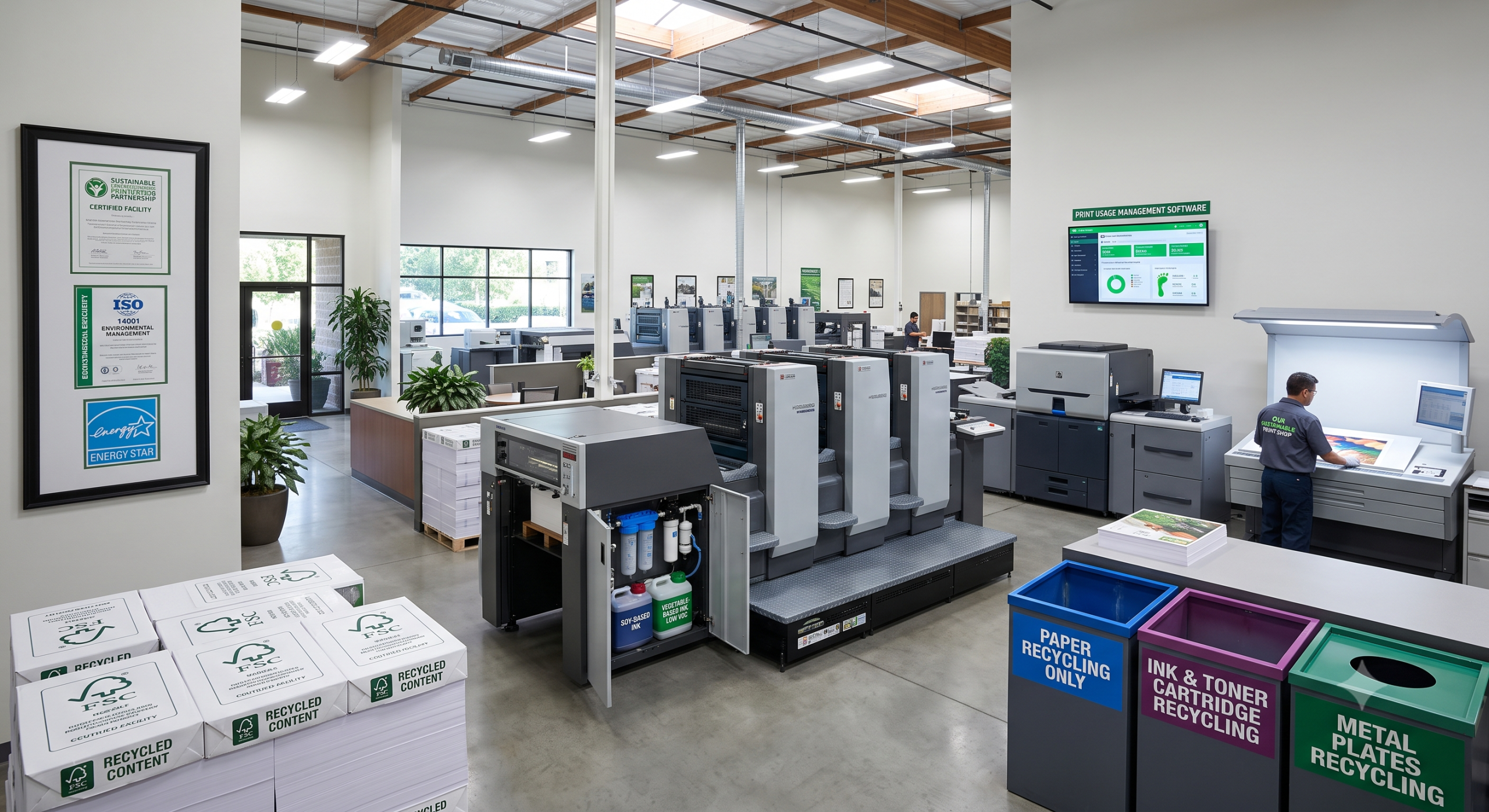
If you run a business in Orange County, you’ve probably felt the push to make your marketing greener. Customers ask about your recycling policies, vendors pitch soy-based inks, and your own team wants to cut waste. The good news? Environmentally responsible printing in Orange County is not a niche add-on anymore. It’s a practical, cost-competitive way to handle direct mail, brochures, and stationery without sacrificing quality. Here’s how to actually do it, what it costs, and where local businesses trip up.
Why Green Printing Isn’t Just a Marketing Tactic
Print gets a bad rap. People assume paper means deforestation and chemical runoff. The reality is more complicated—and more favorable. Modern forestry in North America is heavily regulated, and most commercial paper comes from certified sustainable sources. The bigger environmental costs in printing come from energy use, chemical waste, and shipping. That’s where your choices matter.
For an Orange County business, the local angle matters too. California has stricter environmental regulations than most states, and clients in places like Irvine, Newport Beach, and Costa Mesa expect a certain level of corporate responsibility. If you’re pitching to a company that publishes a sustainability report, your print collateral will be scrutinized. Saying “we used recycled paper” without proof won’t cut it.
The practical benefit? Green printing often reduces waste. When you plan a print run correctly, you print exactly what you need, use efficient layouts, and avoid the landfill. That’s not just eco-friendly—it’s cheaper.
What Actually Makes Printing “Green”?
There’s no single certification that covers everything. Environmentally responsible printing involves several independent choices. Here’s what to look for:
- Paper fiber: Look for FSC (Forest Stewardship Council) or SFI (Sustainable Forestry Initiative) certification. This means the wood came from responsibly managed forests.
- Recycled content: Post-consumer waste (PCW) paper uses fiber that’s already been through the recycling stream. 100% PCW is the highest standard, but 30% PCW is common and affordable.
- Inks: Soy-based or vegetable-based inks emit fewer volatile organic compounds (VOCs) than petroleum-based inks. They also de-ink more easily during recycling.
- Press chemistry: Look for printers that use alcohol-free press solutions and recycle their cleaning solvents.
- Energy: Some local shops run on solar or purchase renewable energy credits. Ask about their utility mix.
- Shipping: A printer in Santa Ana shipping to your office in Anaheim uses less fuel than a printer in Ohio. Local production is inherently greener.
Understanding FSC vs. Recycled Paper
These two get confused constantly. FSC certification is about forest management—it doesn’t mean the paper is recycled. Recycled paper is about the fiber source. You can buy FSC-certified paper that’s 100% virgin fiber, and you can buy recycled paper that isn’t FSC certified. For the strongest environmental claim, look for paper that is both FSC-certified and contains high PCW content. Many commercial lines, like Mohawk’s Via or Neenah’s Environment line, offer both.
How to Choose a Green Printer in Orange County
Not every print shop that claims to be green actually is. Some just sell recycled paper while running dirty presses. Here’s a practical screening process:
- Ask for certifications. Legitimate shops will share their FSC chain-of-custody certificate, SFI certification, or Green-e energy status. A real certificate has a number you can verify.
- Tour the facility. Local is an advantage here. Walk the floor. Does it smell like chemicals? Are there open solvent containers? Are waste materials sorted for recycling?
- Ask about plate recycling. Offset printing uses aluminum plates. A green shop recycles them, not throws them in the trash.
- Check their paper inventory. If they only stock one recycled option and push you toward it, they’re checking a box. A serious green printer has a range of eco-friendly stocks.
- Ask for a waste reduction plan. Good shops gang multiple jobs on the same sheet to minimize paper waste. They also right-size your quantity so you don’t end up with 5,000 obsolete brochures.
Local Certifications and Programs to Look For
Beyond national certifications, some California printers participate in the state’s SB 270 compliance for compostable packaging, or they hold regional green business certifications from local chambers. The City of Irvine and the County of Orange both run green business recognition programs. A printer that’s part of those programs has already been audited for waste, energy, and water use.
Cost Comparison: Green vs. Conventional Printing
Here’s the honest answer: green printing costs slightly more at the margins, but not as much as you think. The price difference has shrunk dramatically in the last decade. Here’s a typical breakdown for a standard 5,000-piece full-color brochure:
| Printing Option | Relative Cost per Piece | Notes |
|---|---|---|
| Standard paper, petroleum ink | Baseline ($0.35) | Cheapest upfront, highest environmental cost |
| 30% PCW recycled paper, soy ink | +5–10% ($0.37–0.39) | Sweet spot for most businesses |
| 100% PCW, FSC-certified, soy ink | +15–25% ($0.40–0.44) | Premium pricing, best for sustainability reports |
The real cost savings come from waste reduction. If you print fewer pieces because you’ve planned better, you save more than any paper premium. A 5,000-piece run you actually use beats a 10,000-piece run you recycle in two years.
When the Premium Is Worth It
If you’re a law firm, real estate agency, or financial advisor pitching high-net-worth clients, the 100% PCW paper with a textured finish signals something. It says you paid attention to detail. The tactile experience of good recycled paper—like Neenah’s Environment line—feels different. It has a slight tooth, a softer hand feel. Clients notice. That’s worth the 15% premium.
If you’re a restaurant printing daily specials or a retail shop doing weekly flyers, the 30% PCW stock is fine. Your customers care that you’re trying, not that your paper is the highest certified grade on the market.
Digital vs. Offset: Which Is Greener?
This is a nuanced question. Offset printing uses aluminum plates, which have an environmental cost to manufacture. Digital printing creates no plates, but toner-based digital presses use more energy per sheet. The answer depends on your run length.
For runs under 500 pieces, digital is almost always greener. No plates, no chemical wash-up, no overproduction. For runs over 2,000 pieces, modern offset presses with alcohol-free dampening and soy-based inks become more efficient per unit. The sweet spot is between 500 and 2,000, where you should ask your printer for a recommendation based on their specific equipment.
One environmental advantage of digital that gets overlooked: it enables variable data printing. You can personalize each piece. That means your direct mail response rate goes up, which means you need fewer pieces to get the same result. Fewer pieces = less waste. That’s the smartest green strategy of all.
Practical Steps: Making Your Next Print Job Greener
You don’t need to overhaul everything at once. Start with these concrete moves:
- Right-size your quantity. Order for 18 months, not 5 years. Marketing collateral goes stale. Print less, print more often.
- Consolidate your vendors. Use one local printer for direct mail, stationery, and signage. That reduces shipping multiple times from different locations.
- Specify soy ink by default. It costs the same as petroleum ink now. No reason not to.
- Ask for recycled stock. Start with 30% PCW. See if your customers notice. They won’t, but you’ll sleep better.
- Request digital proofs instead of hard proofs. Each hard proof is a sheet of paper that goes in the bin. PDF proofs are free and instant.
- Design for efficiency. Ask your designer to create layouts that nest on a press sheet with minimal trim waste. A good print shop will help with this.
- Plan for recycling. Put a “please recycle” note on your collateral. It’s a small thing, but it signals your values to your customers.
Common Mistakes Orange County Businesses Make
I’ve seen the same errors repeatedly. Here’s what to avoid:
Greenwashing without substance. Claiming you use “eco-friendly” printing when you just bought whatever paper your printer recommended is risky. California has strict advertising laws against false environmental claims. If you say it, you need to back it up.
Ignoring the supply chain. Your brochure might be printed on recycled paper, but if it’s shipped in a non-recyclable plastic wrapper from a warehouse in another state, you’ve undermined your effort. Ask about packaging too.
Forgetting the digital counterpart. The greenest print is the print that doesn’t happen. If you’re sending a 12-page brochure to a list of cold leads, consider a one-page teaser with a QR code linking to your full digital catalog. You save paper, postage, and money.
Choosing the wrong paper weight. Heavier paper feels premium but uses more fiber and costs more to ship. A 100 lb. text stock with a nice finish often feels as good as a 130 lb. cover stock at a fraction of the environmental cost.
Measuring Your Environmental Impact
Before you claim victory, ask your printer for the numbers. A good green printer can tell you:
- How many trees were saved by using recycled fiber
- Gallons of water saved compared to virgin paper production
- Pounds of CO2 avoided by using soy ink and local shipping
- Kilowatt-hours of renewable energy used on your job
These aren’t vanity metrics. They go into your own sustainability report, your pitch decks, and your website. When a client asks what you’re doing about the environment, you’ll have a specific answer instead of a hand wave.
What to Ask Your Printer Before You Commit
Walk into your next meeting with these questions. If the printer hesitates on any of them, that’s a red flag:
- What percentage of your paper inventory is FSC-certified?
- Do you offer 100% PCW recycled stock, or just 30%?
- Are your inks soy or vegetable-based?
- Do you recycle your aluminum plates and press wash-up solvents?
- What’s your typical paper waste percentage on a standard run?
- Can you provide a per-job environmental impact report?
- Do you use renewable energy in your facility?
You don’t need a perfect score on all seven. But you want a printer who can answer them without fumbling. If they can’t, they haven’t thought about this seriously.
Environmentally responsible printing in Orange County is achievable today. It’s not some future-state ideal. The paper exists, the inks exist, and the local expertise exists. The only missing piece is your decision to prioritize it. Start with one job. Test the quality, check the cost, and measure the response. When you see that your customers appreciate the effort and your bottom line barely moves, you’ll wonder why you waited.